A Progressive Spinal Cord Disorder Requiring Timely Care
What is Cervical Myelopathy?
Cervical myelopathy is a condition caused by compression of the spinal cord in the neck (cervical spine). It commonly results from age-related degeneration of the cervical spine and can lead to progressive neurological deficits if left untreated. Unlike simple neck pain or radiculopathy, cervical myelopathy affects the spinal cord itself and often requires timely surgical intervention.
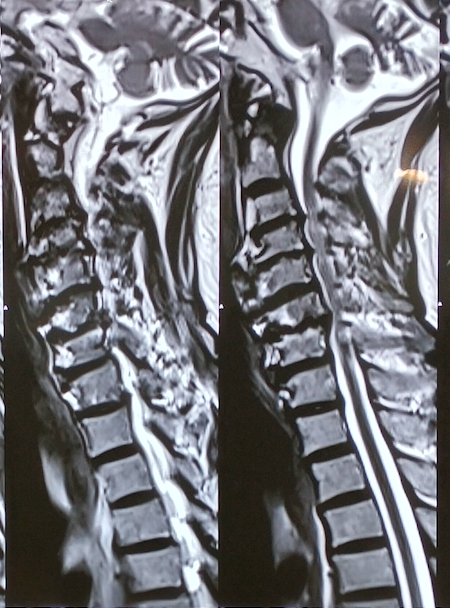
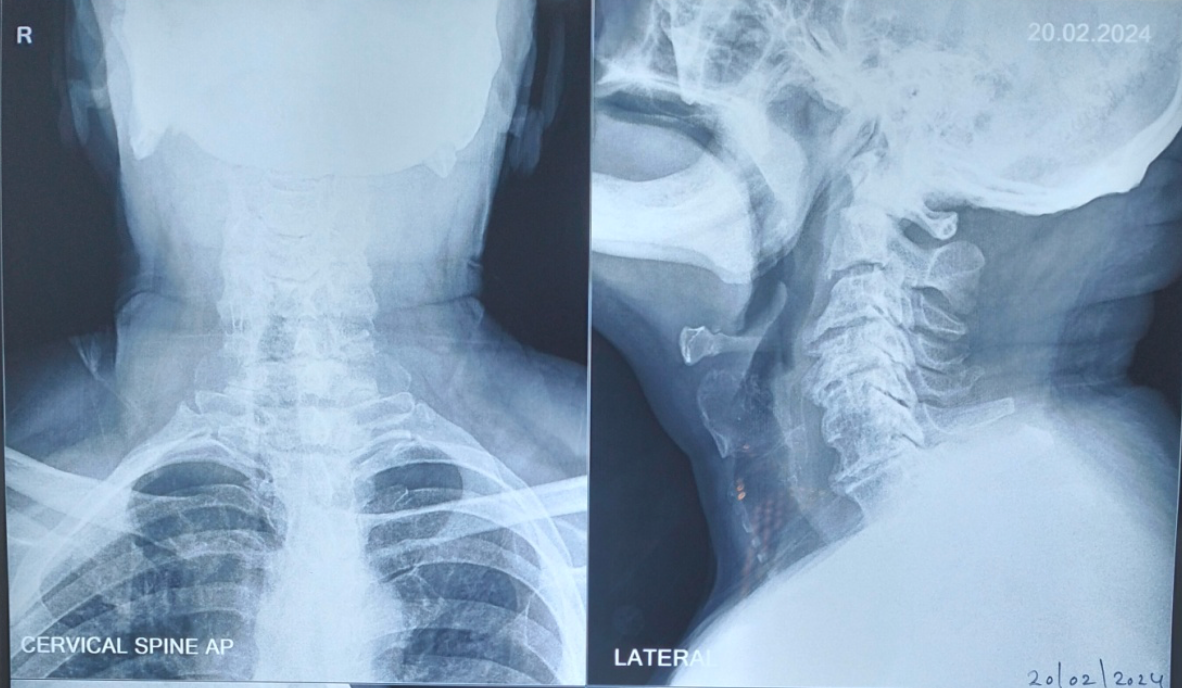
Unlike routine neck pain or nerve root compression, cervical myelopathy affects the spinal cord itself, which controls movement, coordination, balance, and fine motor skills. As a result, patients may experience hand clumsiness, gait imbalance, limb weakness, and sensory disturbances, often progressing gradually over time.
Causes of Cervical Myelopathy
Cervical myelopathy usually develops due to chronic narrowing of the spinal canal. Common causes include:
- Cervical spondylosis (degenerative changes)
- Disc herniation causing spinal cord compression
- Thickened ligaments (ligamentum flavum hypertrophy)
- Ossification of the posterior longitudinal ligament (OPLL)
- Congenital narrow spinal canal
- Post-traumatic cervical spine changes
Why Cervical Myelopathy is Serious
Cervical myelopathy is a progressive condition. Once spinal cord damage occurs, recovery may be incomplete. Early diagnosis and timely treatment are crucial to prevent permanent neurological disability.
Symptoms of Cervical Myelopathy
Symptoms may be subtle initially and progress gradually:
- Neck stiffness or discomfort
- Hand clumsiness (difficulty buttoning shirts, writing, holding objects)
- Weakness in arms or legs
- Numbness or tingling in hands and feet
- Imbalance while walking or frequent falls
- Electric shock-like sensation down the spine on neck movement (Lhermitte’s sign)
- In advanced cases: bowel or bladder disturbances
Diagnosis
A comprehensive evaluation is essential:
- Clinical examination: Assessment of reflexes, muscle strength, gait, and coordination
- MRI Cervical Spine: Gold standard to identify spinal cord compression and signal changes
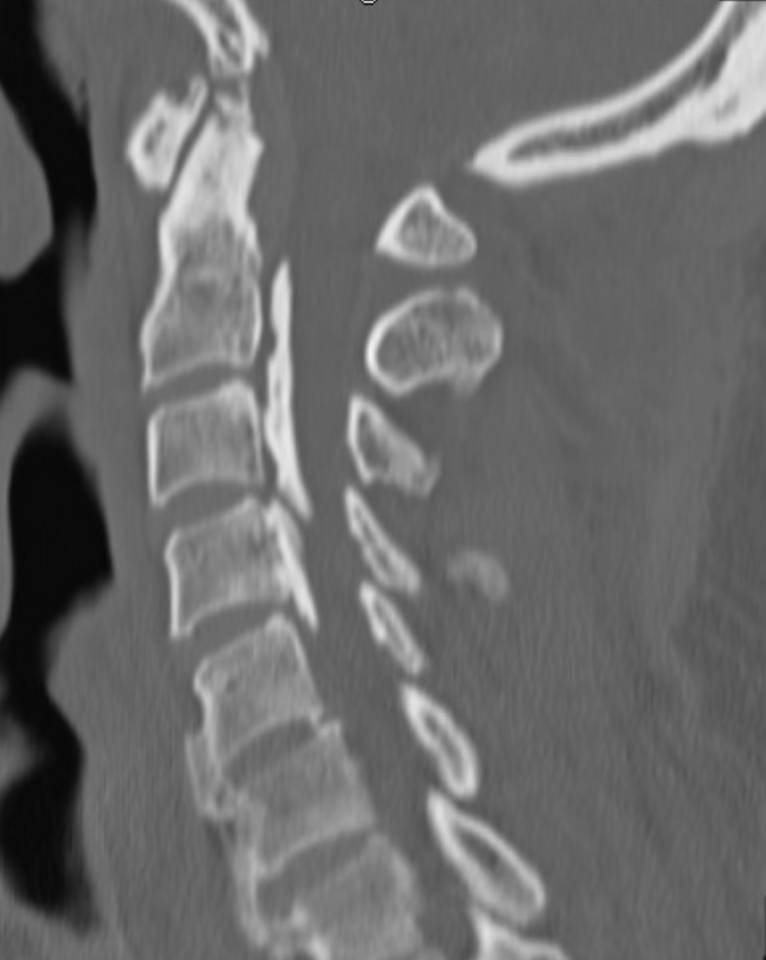
- CT scan: Helpful in assessing bony compression and OPLL
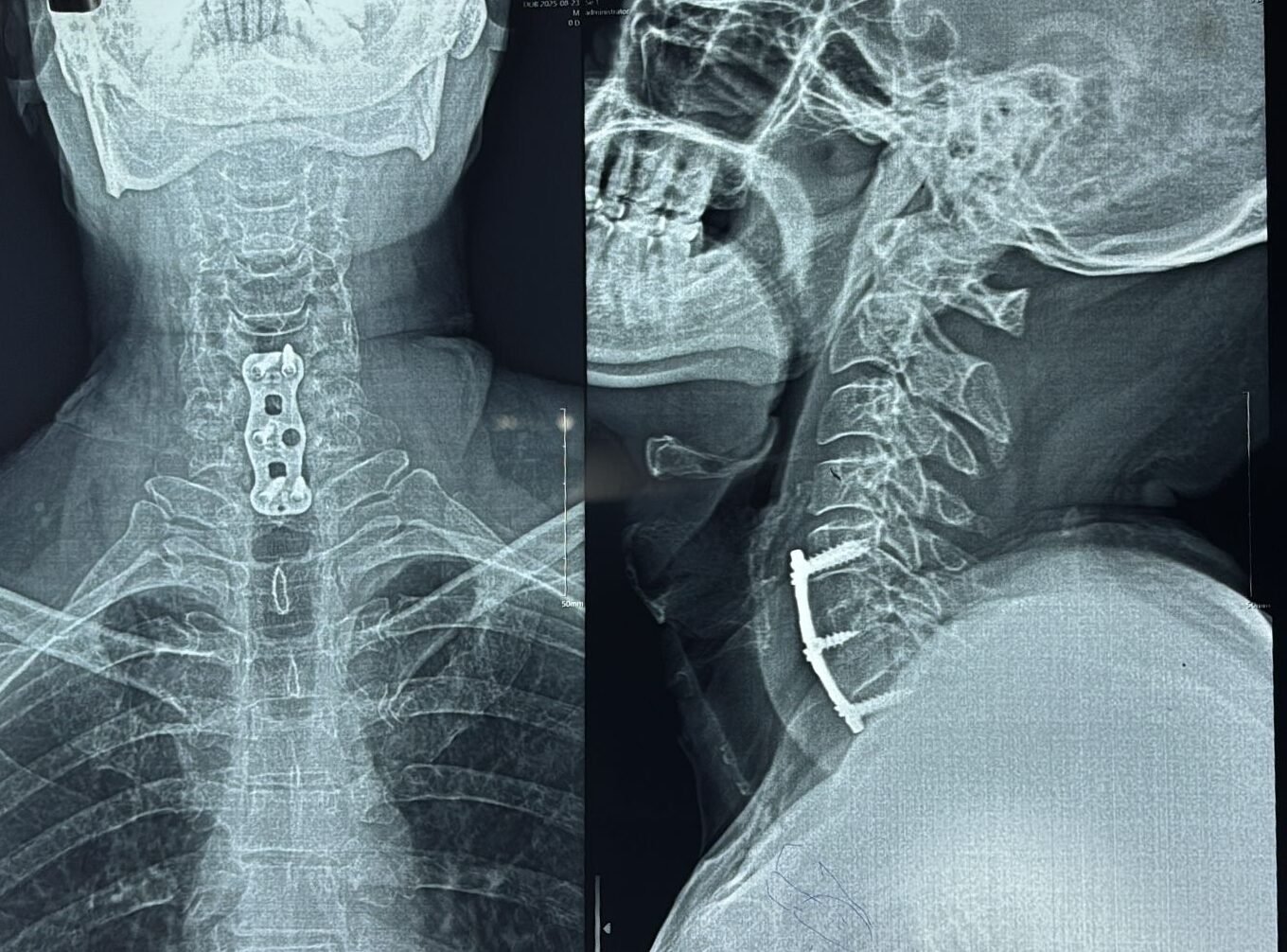
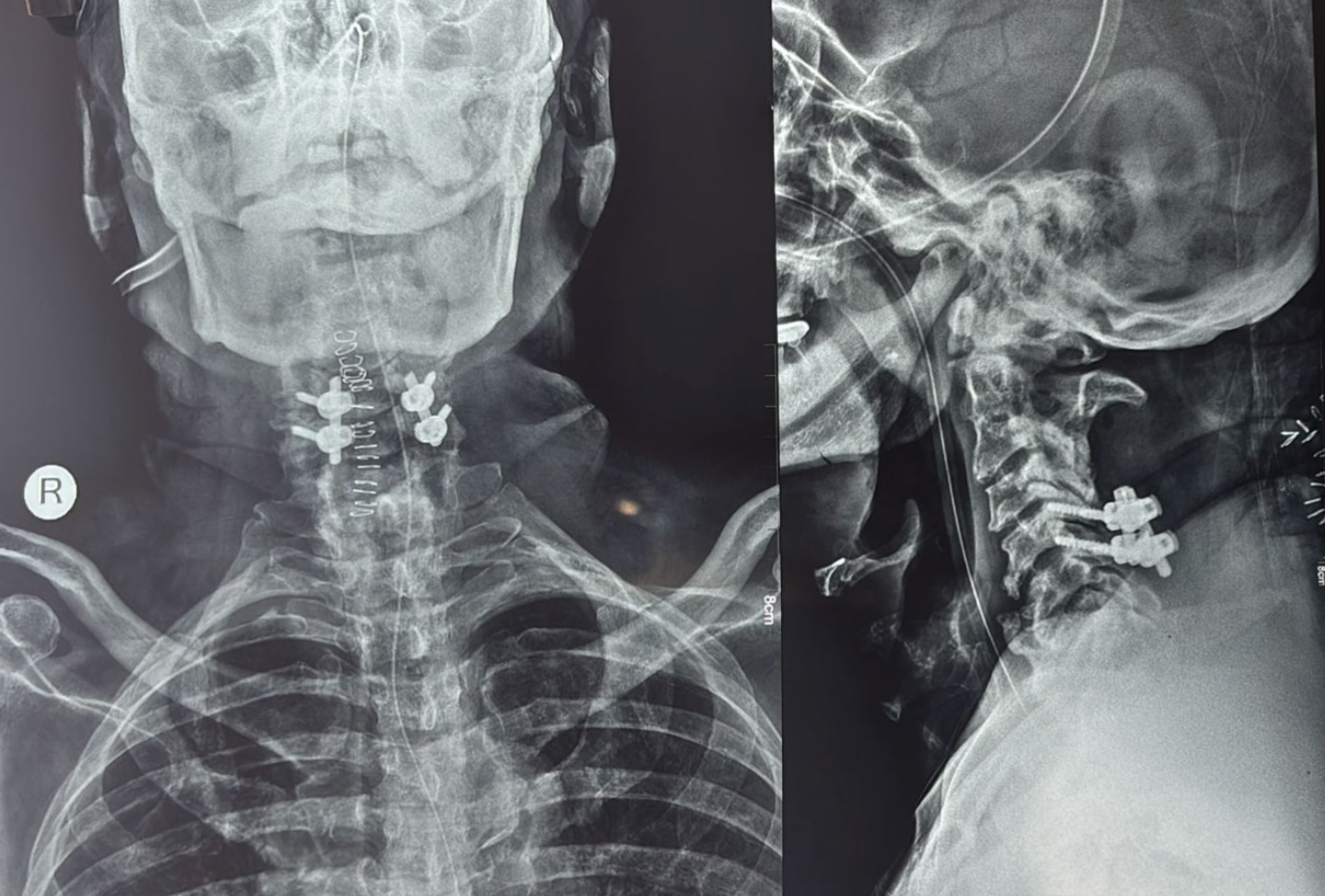
- X-rays: To evaluate alignment, instability, and degenerative changes
Treatment Options
Non-Surgical Treatment
Conservative treatment has a limited role and may be considered only in very mild, non-progressive cases:
- Activity modification
- Medications for pain or stiffness
- Close neurological monitoring
⚠️ Non-surgical treatment does not reverse spinal cord compression.
Surgical Treatment
Surgery is the definitive treatment for most patients with cervical myelopathy.
The goals of surgery are to:
- Decompress the spinal cord
- Prevent further neurological deterioration
- Improve function and quality of life
Surgical options include:
- Anterior Cervical Discectomy and Fusion (ACDF)
- Cervical Corpectomy
- Posterior decompression (Laminoplasty / Laminectomy with fusion)
- Minimally invasive or endoscopic-assisted techniques in selected cases
The choice of surgery depends on the number of levels involved, spinal alignment, and cause of compression.